Cracking the Heart Rate Code
by Agnar Steinarsson
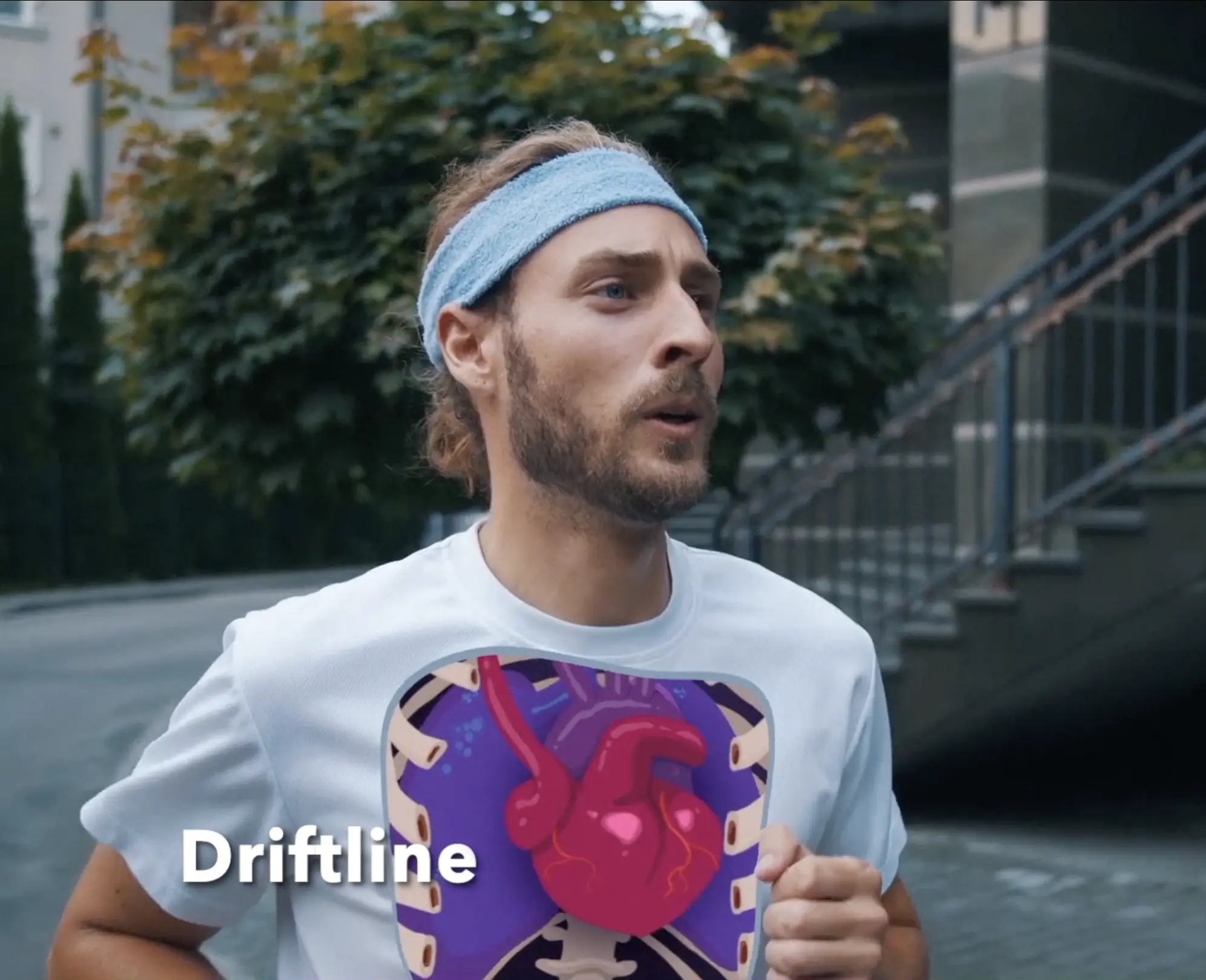
Wow, 3.6 billion! In years, that‘s about the entire history of life on Earth. In people, that‘s about the coverage of Zuckerberg’s Metaverse. But in your chest, that's about the number of times your heart might beat should you be so blessed to live into your old age!
Your faithful heart!
Your lifetime companion that keeps you going day and night, never stopping for a break. Your heart is always there for you in your moment of need, ready to put in the work. Pumping you up to climb those stairs or escape that lion. Holding the fort while you‘re sleeping. Your faithful heart!
 Checking the engine!
Your heart rate can range from perhaps 40 beats per minute (bpm) while you sleep, to even more than 200 bpm during maximum exertion. Your heart responds directly to your immediate energy demand, pumping blood to supply those needy organs and muscles with fuels and oxygen, and removing those nasty waste products.
What’s the state of the heart?
Now surely, after centuries of collective research, science completely understands the workings of the human heart, arguably our single most important organ. Surely, with the advent of all those new heart rate monitors and smartwatches, we now have a full grasp of the underlying mechanisms behind our heart rate. Or do we? Your expensive smartwatch meticulously tracks your heart rate 24/7, but what can it really read from your heart rate? What can it tell you about your health, fitness, or physiology?
Well, let's see. Your smartwatch can tell you your resting heart rate but you'll have to figure out your maximum heart rate (HRmax) by exercising to the point of collapse. Your heart rate zones are just fixed percentiles of your estimated HRmax with no physiological basis. Some sports trackers may estimate your VO2max (maximum oxygen consumption) as a proxy for endurance, even though hundreds of studies have shown VO2max to correlate poorly with endurance performance. By using a chest strap and running extremely hard you may get a very rough estimate of your lactate threshold.
And that's about it! Did you purchase a fitness tracker for 150$, counting 100.000 heartbeats per day for that?! What about reading into your heart rate and giving you feedback on your health and fitness? What about energy systems and aerobic endurance? What about your maximum heart rate and maximum running speed? What about muscle mass and muscle fibers? What about metabolic rate and fat oxidation? What about physical performance scores?
The 50-year controversy.
Well, the fact is that science has failed to understand the physiological foundations of heart rate. For more than 50 years, exercise scientists have been entangled in a chaotic web of thresholds and complicated laboratory measurements, as explained in a recent review by leading scientists (Poole et al. 2021).
The long-standing, extreme focus on the magic word, VO2max, has misled the scientific community. Scientists have not spotted the elegant physiological laws underlying our heart rate. They have not realized how our heart rate reflects the very core of our existence, namely the metabolic engine inside our muscles. Well, in due modesty this is finally all about to change.
Cracking of the heart rate code.
The Icelandic software company Driftline, now introduces the Component theory of heart rate kinetics, currently pending at the European patent office. The theory takes your exercise-induced heart rate response and divides the curve into successive components. The graph below shows an illustrative example of a heart rate curve produced from running at a constant speed to near exhaustion. These components reflect the activation, recruitment, and depletion of different types of aerobic muscle fibers in a precise manner, as discovered by Driftline.
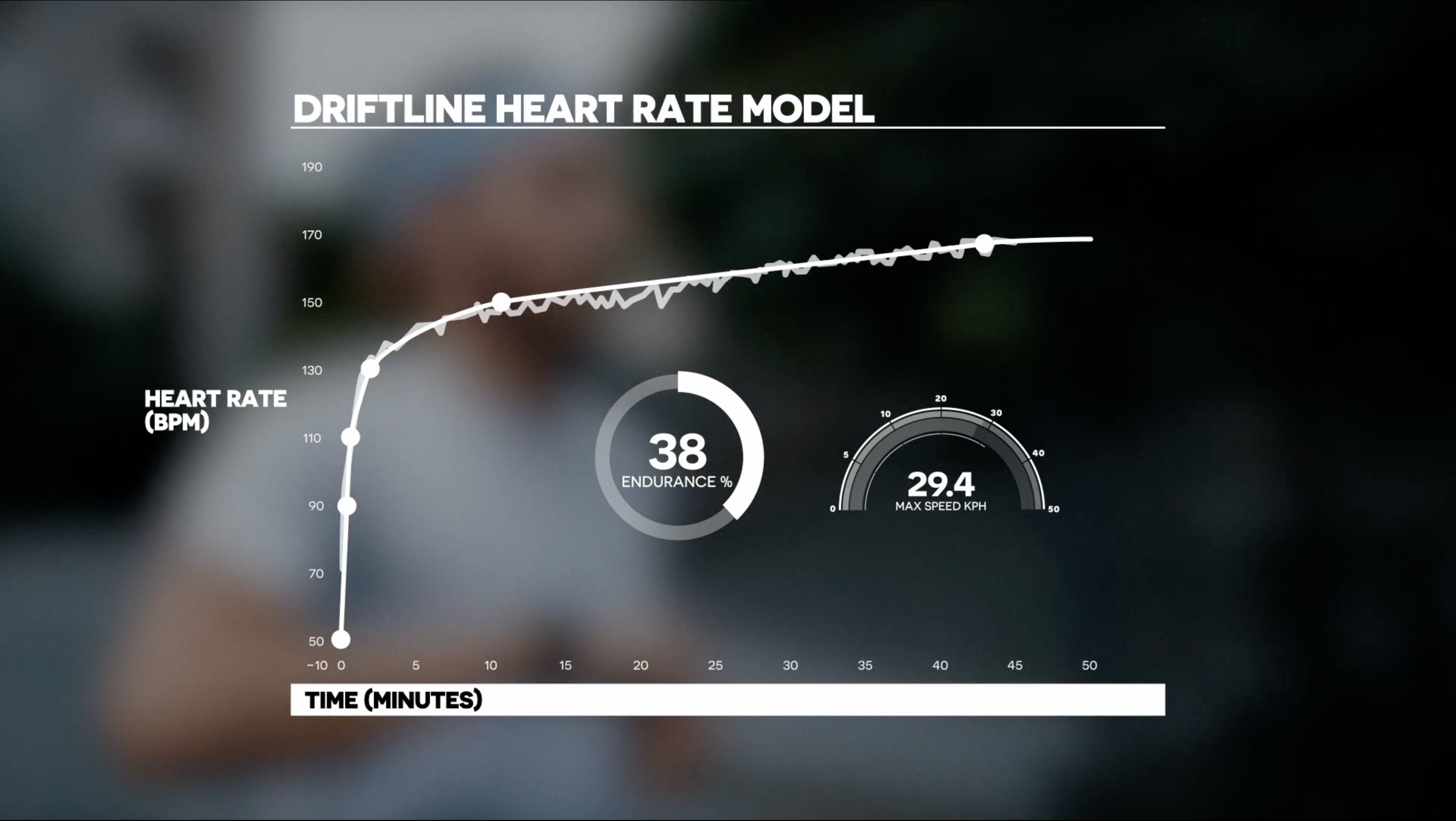 The Driftline heart rate kinetics.
The shape of the heart rate curve is therefore a direct reflection of the underlying muscle morphometry or in simplified terms, the ratio between your slow and fast muscle fibers. The transition points between components reflect the successive recruitment of energy systems and depletion of fuel stores during exercise. During recovery, the process is reversed.
With the innovative Component theory, Driftline proudly claims that the enigma of the heart rate code has been cracked!
So what?
What’s the practical use? Well, considering that almost all bodily processes are mirrored in our heart rate, we can think of quite a few applications. Besides the obvious sports applications, these may include an analysis of muscle morphometry and cardiorespiratory fitness with potential implications for battling the ageing-related loss of muscle mass, obesity, and cardiovascular disease. All these issues will be covered in detail in our upcoming blogs.
This pending breakthrough in exercise physiology has too many aspects to be covered in just one or two blogs. Instead, we will focus on only one isolated aspect in each of our blogs. In our next blog, we will be covering our innovative exercise threshold theory.
Driftline is on a mission to transform the field of heart rate kinetics.